
Keeping a set in one piece
Where the pieces go at the end of the day, why the bag matters more than the shelf, and what to do about the tile that went under the sofa in March.
A hundred tiles will find a hundred places to be if you let them. The households where these sets survive for years all do the same small things, and none of them involve buying a storage system.
The bag beats the box
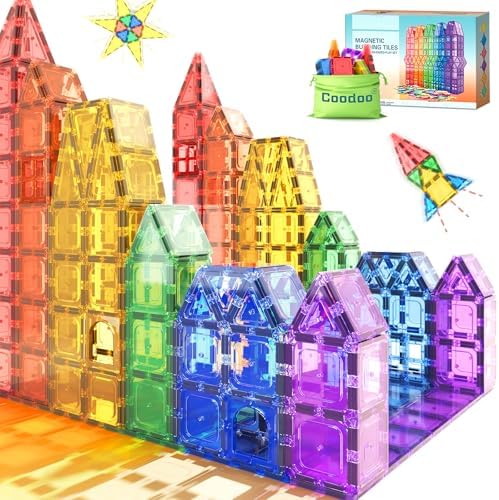
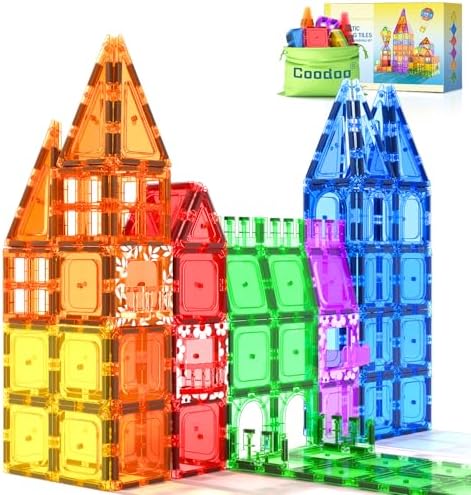
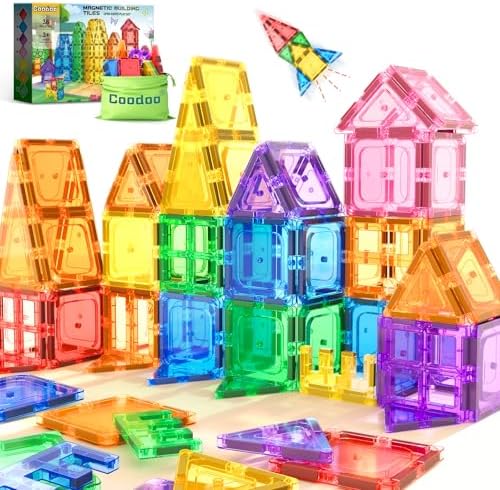
Five of our sets ship with a carry bag, and it is not packaging. The cardboard box a set arrives in gives up after a month of being tipped out. A bag with a drawstring survives being dragged from room to room, and the child can carry it themselves, which is the difference between tidying up and being tidied up after.
If your set came without one, any drawstring bag works. What does not work is a lidded plastic tub, because a tub has to be opened by an adult and so the tiles stay on the floor.
The tin is a base as well as a lid
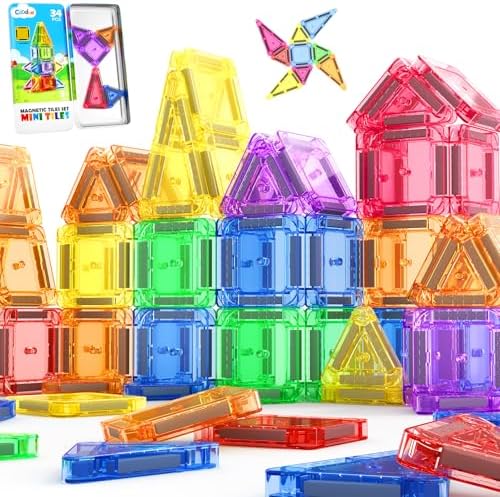
All six of our travel sets come in a metal tin, and on several of them the tin doubles as a magnetic build surface. Turn the lid over, build on it, and the whole thing stays put on a plane tray or a restaurant table. It also means the pack up is one motion instead of a sweep across a table with a child watching.
Counting without counting
Do not count tiles. Count shapes. If the squares are gone the child will tell you within a minute of starting, and if two triangles are missing nobody will ever notice. Once a season, move the sofa. That is where they are.
Cleaning
A damp cloth and nothing else. These are sealed shells with magnets inside, so a sink of water is a bad idea even where the seal is good. Craft kits are the exception: our flower dyeing pigments are stated as washable from hands and tables, which is the sort of thing you want to know before the tablecloth finds out.
If you are shopping for the bag or the tin specifically, the sets that include one are below.
Sets that come with somewhere to put them
The boxes this note is about, in order of how many people have bought them.
The other notes
Written from the same floor.
How many tiles to start with
What 36 pieces build, where 60 stops being enough, and why the answer changes the moment a second child sits down. Counted against the sets we actually make.
What the box saysWhat is actually inside one of our tiles
Plastic, magnets, and how the two are held apart. What our boxes state about materials, sealing and age grading, and the one check worth doing yourself.
On the rugMixing our tiles with the ones you already own
The three inch base, what it means for a pile that came from somewhere else, and the one size of ours that will not join in.
On the rugFive builds for the first week
What to show a child on day one so the pile does not become a pile. Five builds in order of difficulty, each one out of squares and triangles.